Table Of Content
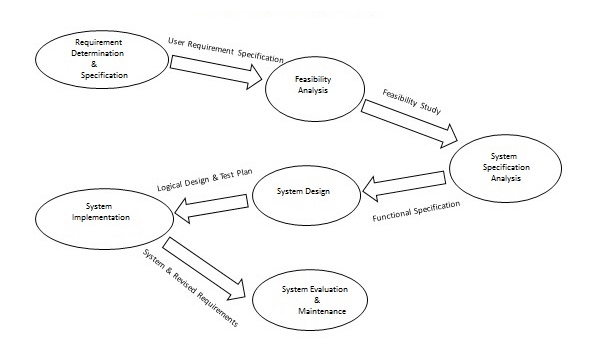
Analysis can also be a series of components that perform organic functions together, such as systems engineering. Systems engineering is an interdisciplinary field of engineering that focuses on how complex engineering projects should be designed and managed. This information will become the projects charter and the basis for initiating the project. The project then follows the PLAN-DO CHECK-ACT cycle (as defined by Shewhart and modified by Deming, in the ASQ Handbook, pages 13-14, American Society for Quality, 1999).
INTRODUCTION TO SYSTEMS ANALYSIS AND DESIGN
So, even though both companies are very similar, Cadence has a light competitive advantage over Synopsys due to its margin management. The Department of Computer and Information Technology provides educational opportunities that apply information technology to solve societal challenges. From cyber forensics and Big Data, to databases and analytics, impactful research is improving society and enriching the constantly updated academic programs.
Structured / Waterfall[edit edit source]
I have analyzed Cadence's business model in the article, confirming my expectations about its competitive advantages. I have confirmed that the industry is very attractive, dominated by Cadence and Synopsis, with high returns and barriers to entry. Likewise, I have compared Cadence and Synopsis, stating the advantages of the first over the second. Profitability in Cadence is higher than Synopsys in all indicators, as shown in Figure 5. Returning to the primary measure of value, the leveraged FCF margin is 22.7% vs 18.4%.
Systems Analysis and Design with UML, 4th Edition by
Every record on the file is processed starting with the first record until End of File (EOF) is reached. It is efficient when a large number of the records on the file need to be accessed at any given time. Data stored on a tape (sequential access) can be accessed only sequentially. Also, when system analysis is implemented, it makes the software more flexible. System analysis makes managing the business easier and much more convenient.
ASIC Design Services and Mentor to Hold Workshop on Thermal Analysis and Design - I-Connect007
ASIC Design Services and Mentor to Hold Workshop on Thermal Analysis and Design.
Posted: Tue, 19 Sep 2023 15:17:04 GMT [source]
The primary objective of systems analysis and design is to improve organizational systems. This tutorial provides a basic understanding of system characteristics, system design, and its development processes. It is a good introductory guide that provides an overview of all the concepts necessary to build a system. Study how organizations use computer systems and procedures and then design information systems solutions to help them operate more efficiently and effectively.
Cadence AI Can Increase Chip Design Quality And Chip Designer Productivity Over 1000% - Forbes
Cadence AI Can Increase Chip Design Quality And Chip Designer Productivity Over 1000%.
Posted: Tue, 13 Jun 2023 07:00:00 GMT [source]
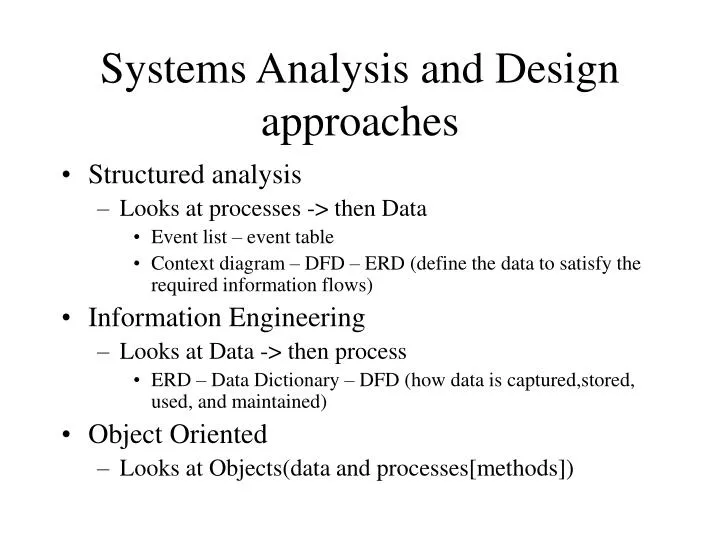
Process modeling identifies the data flowing into a process, the business rules that transform the data, and the resulting output data flow. Chapter 2 includes how to initially approach an organization by drawing context-level data flow diagrams, using entity-relationship models, and developing use cases and use case scenarios. Chapter 3 introduces expanded material on creating the project charter and introduces writing the systems proposal early in the process, no matter what method of analysis and design has been chosen. Expanded coverage of evaluating software and hardware, and when to use COTS (commercial off-the-shelf software), is included.
You will combine business practices with programming, applications and databases. You will be encouraged to further specialize with a minor in a specific field, such as healthcare, finance, agriculture or manufacturing. Your coursework within your first year includes information technology architecture, systems development and software development concepts. The major goal of systems analysis and design is to improve organizational systems.
Structured analysis is a traditional systems development technique that is time-tested and easy to understand. Because it describes the processes that transform data into useful information, structured analysis is called a process-centered technique. In addition to modeling the processes, structured analysis includes data organization and structure, relational database design, and user interface issues.
chapter 721 pages

With an 80% gross margin, they would need a 17% market share to break even. I see that as impossible because getting this market share will require a lot of time, and it would be impossible to think that Cadence and Synopsys wouldn’t react. The other segment (42%) is niche market segments that are less profitable, and to capture a significant part of this market, you would need to have an even more complex product. This tutorial will be of particular interest to instructors who have students do a major project as part of their course.
The word System is derived from Greek word Systema, which means an organized relationship between any set of components to achieve some common cause or objective. System analysis is conducted for the purpose of studying a system or its parts in order to identify its objectives. It is a problem solving technique that improves the system and ensures that all the components of the system work efficiently to accomplish their purpose.
The 10th Edition reflects the rapidly changing face of the IS field and incorporates new technologies and innovations. Additional coverage of security and privacy issues and innovative materials on new developments, such as designing virtual reality and intelligent personal assistants, are included. So, in conclusion, we can say that system analysis is a problem-solving strategy that includes glimpsing at the more extensive system, breaking the separated parts, and sorting out how it works to accomplish a specific objective. Consequently, System analysis and design generally concentrate on Systems where there are several properties and elements of systems.
It covers the life of the system from planning, through launch, to assessment. A key concept in information technology, the SDLC encompasses a mix of software and hardware configurations. These can include systems consisting of only software, only hardware, or a combination of both. In software development, system design is the process of defining the architecture, interfaces, and data model for a system to satisfy the requirements outlined in the SRSs.
In the system analysis phase, analysts are concerned with outlining a proposed solution to a defined problem. In doing so, they consider how viable and effective the product is or will be. System analysts consider the system’s overarching goals, which they can then break down into components or modules to enable individual analyses. Before coding, there should be a understanding on pseudo, algorithm and the high level language(C, C++, C#, Java, etc.) you want to make use of.
It has been said that if you can not document the artifacts of your work, you will probably fail. The Unified Modeling Language (UML) provides a very robust notation, which grows from analysis to design. It is a language used to specify, visualize, and document the artifacts of an object-oriented system under development.
The planning may also include how the user would like to solve the problem. Defining the scope of the problem is also important in this stage as well. Once the problem is determined, and one or more solutions have been selected, planning to implement the solution begins. Multiple scenarios may be enacted to determine the best course of action for implementing the system. It is the very first step in any system development and the critical phase where developers come together to understand the problem, needs, and objectives of the project. Secondly, I will describe an optimistic scenario in which I make some assumptions to arrive at a valuation similar to the current stock price.
Chapter 1 introduces the systems development life cycle (SDLC), the fundamental four-phase model (planning, analysis, design, and implementation) common to all information systems development projects. It describes the evolution of system development methodologies and discusses the roles and skills required of a systems analyst. The three roles of the systems analyst as consultant, supporting expert, and agent of change are introduced, and ethical issues and professional guidelines for serving as a systems consultant are covered. There is also material on virtual teams and virtual organizations, and the concept of HCI is introduced. Systems Analysis and Design is an active field in which analysts repetitively learn new approaches and different techniques for building the system more effectively and efficiently.


No comments:
Post a Comment